Participatory Environmental Design
Participatory Environmental Design (PED) is a framework for integrating community knowledge, priorities, and decision-making into the design of complex climate and environmental projects.
The framework was developed for multi-benefit projects such as nature-based solutions, shoreline adaptation, watershed restoration, and other efforts where environmental performance, community priorities, governance, access, equity, and long-term stewardship are closely connected.
The three-part paper series introduces the PED framework, examines how it operates in practice, and provides an approach for evaluating both the participatory process and the environmental project it helps shape.
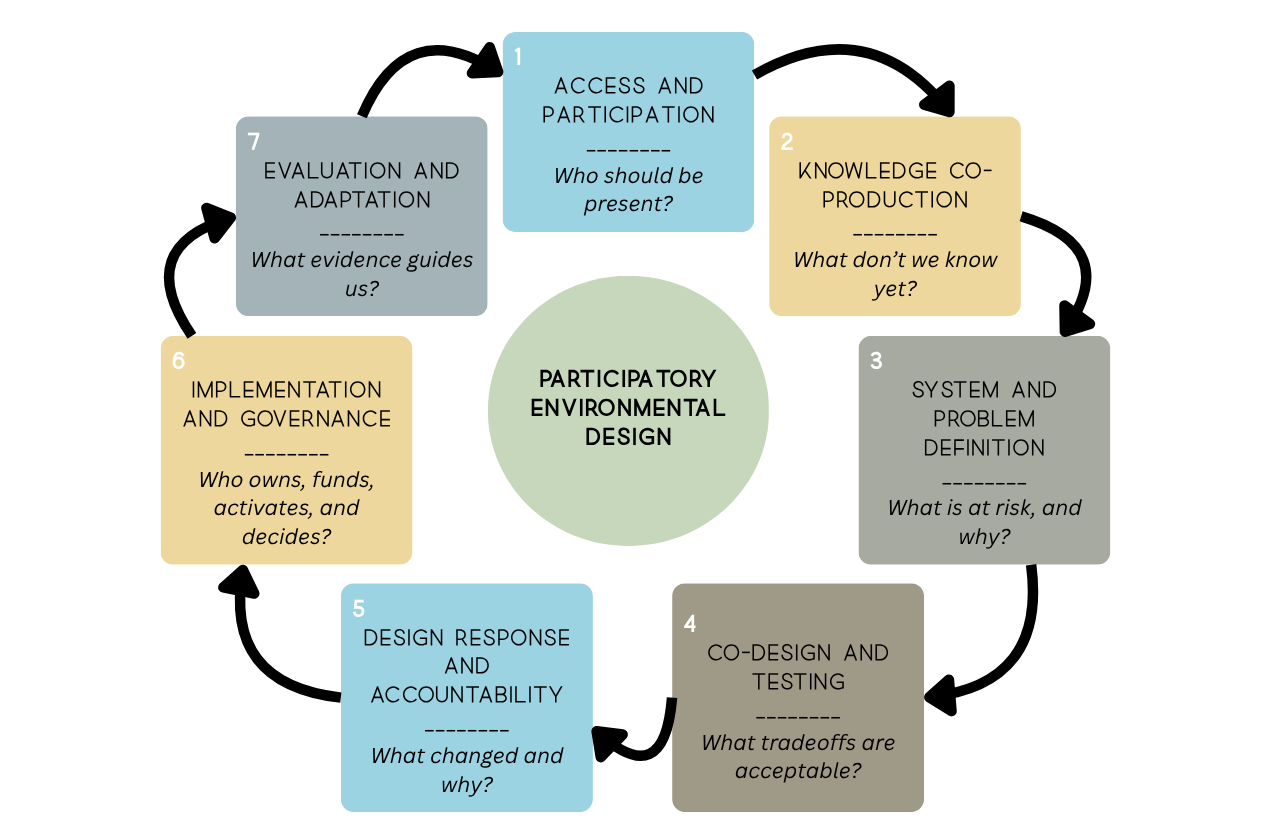
Paper 1: Framework
A Framework for Multi-Benefit Environmental Adaptation Projects
Introduces the PED framework, its rationale, core components, enabling conditions, and application across the environmental project life cycle.
Paper 2: Case Study
Participatory Environmental Design in Practice: North Richmond Collaborative Shoreline Adaptation Project
Examines how the PED framework was applied through the planning and design of a multi-benefit shoreline adaptation project in North Richmond, California.
Coming soon
Paper 3: Evaluation Methodology
Evaluating Participatory Environmental Design Across the Multi-Benefit Project Life Cycle
Presents an evaluation framework for examining both the quality and influence of the participatory process and the environmental, social, governance, and long-term outcomes of the project it shapes.
Coming soon